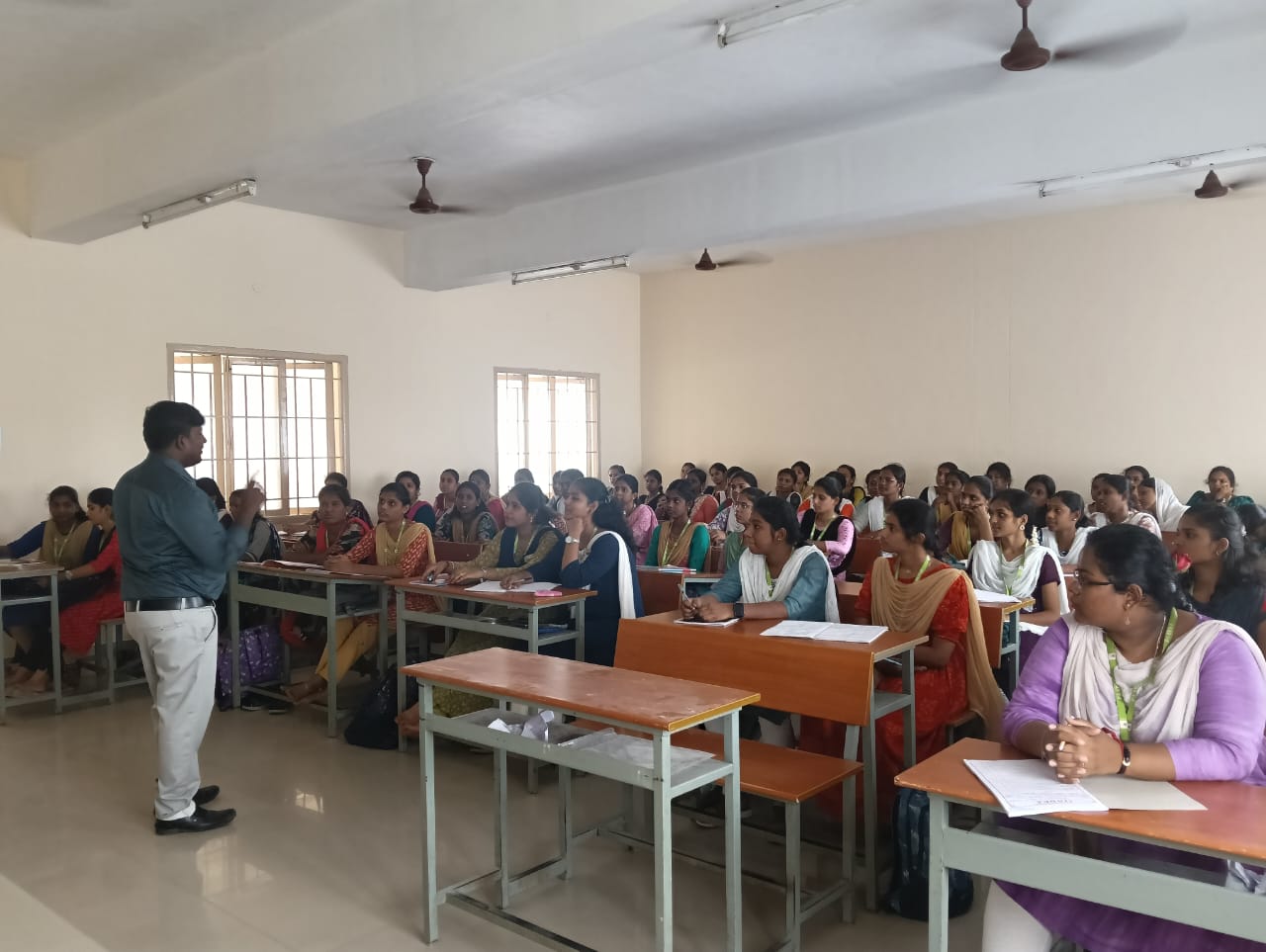

TCS Placement Readiness Training Programme was held on 04.08.2026 to 10.08.2026.
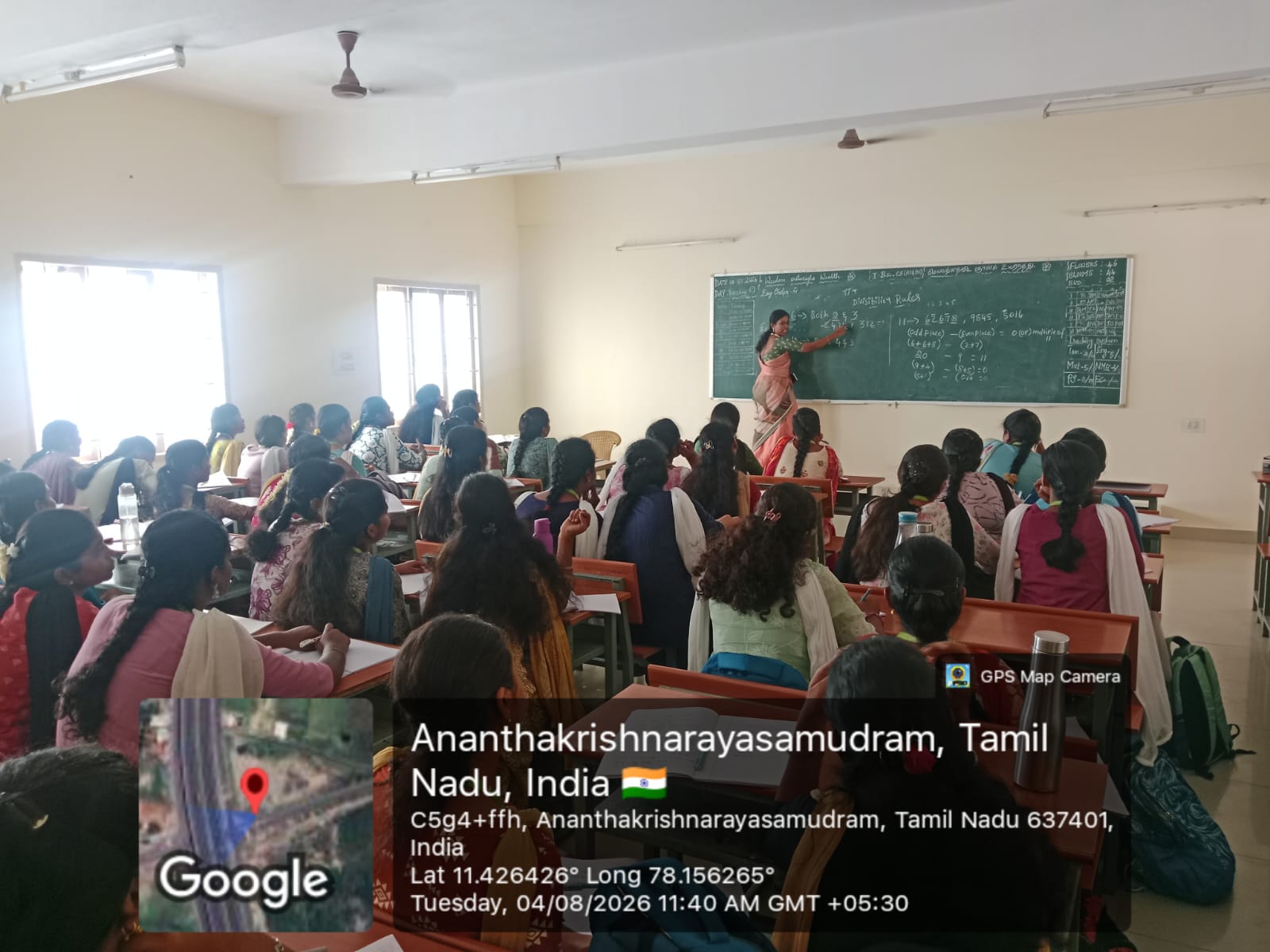
Day – 1 (04.08.2026)
The training session focused on important quantitative aptitude topics, including Number System, Percentage, Profit and Loss, and Ratio. Students were introduced to fundamental concepts, formulas, problem-solving methods, and shortcut techniques. Practical examples and practice questions were discussed to improve their numerical ability, calculation speed, and accuracy.
Day – 2 (05.08.2026)
The second day covered Time and Work, Coding-Decoding, and Blood Relations. Students learned methods for solving work-based problems using efficiency and time concepts. In reasoning, different patterns of coding and decoding were explained, along with techniques for identifying relationships among family members and solving blood-relation problems logically.
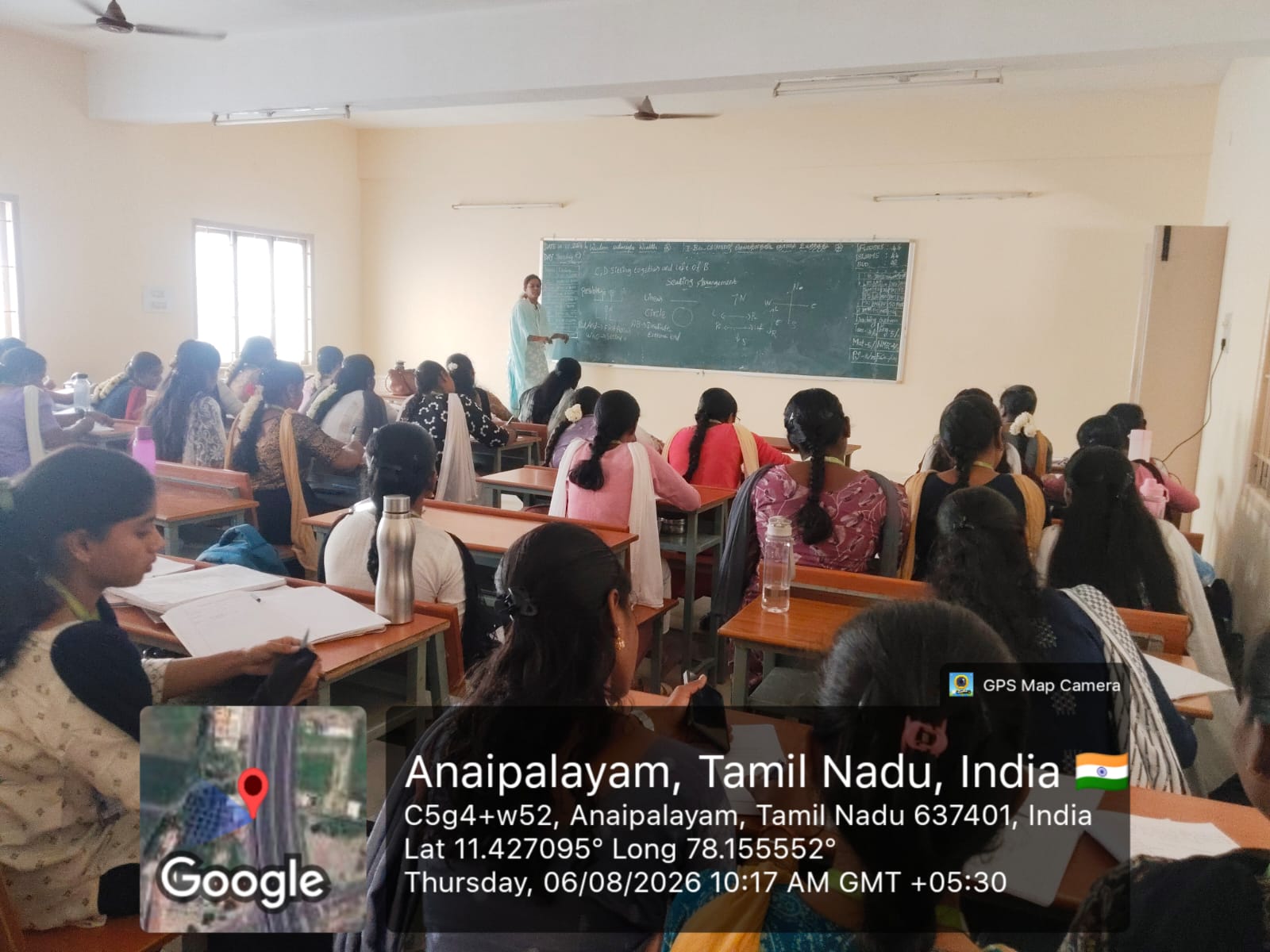
Day – 3 (06.08.2026)
The third day dealt with Direction Sense and Alphabet, Number and Letter Series. Students were trained to identify directions, calculate distances, and determine the final position using systematic approaches. Various patterns in alphabetic, numerical, and alphanumeric series were explained, enabling students to identify sequences and predict the next or missing elements accurately.
Day – 4 (07.08.2026)
The session focused on Seating Arrangement, an important logical reasoning topic in placement examinations. Students were trained to solve linear and circular seating arrangement problems by interpreting given conditions, identifying relationships between individuals, and arranging the information systematically. Practice exercises were provided to improve their logical thinking and problem-solving speed.
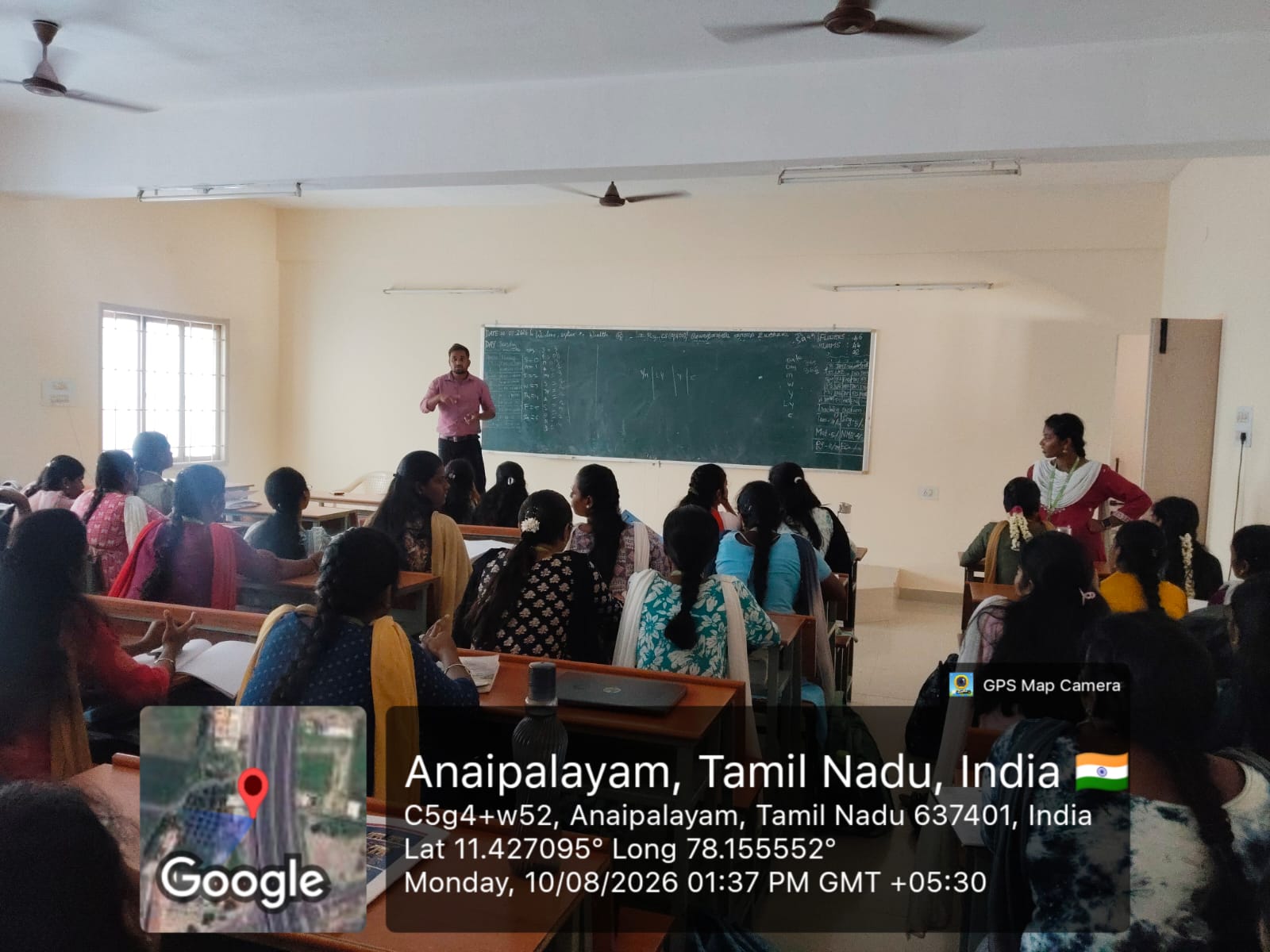
Day – 5 (10.08.2026)
The final session focused on Simplification, where students practiced fundamental arithmetic operations, BODMAS rules, fractions, decimals, percentages, and other calculation-based problems. Emphasis was placed on quick calculation techniques, accuracy, and effective time management to help students solve numerical questions efficiently during placement assessments.