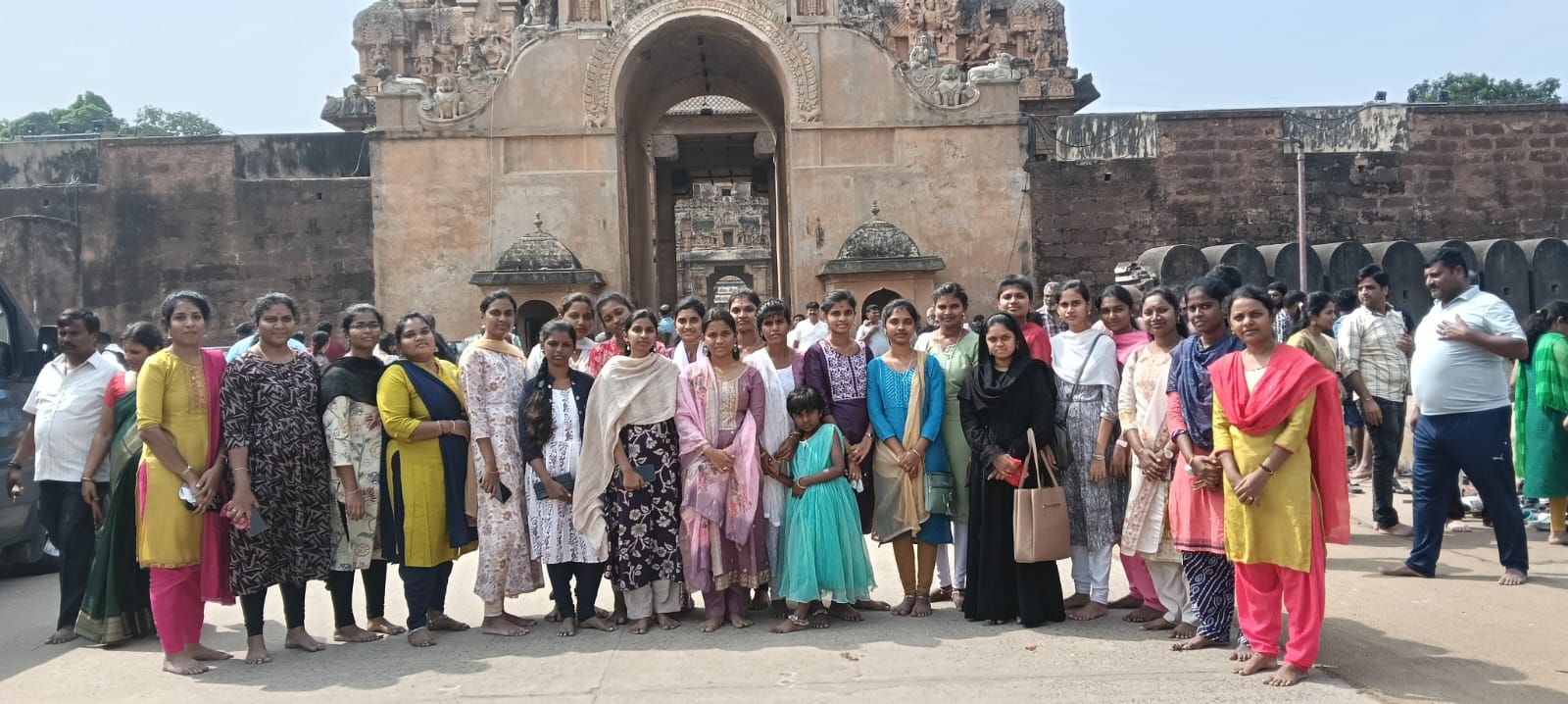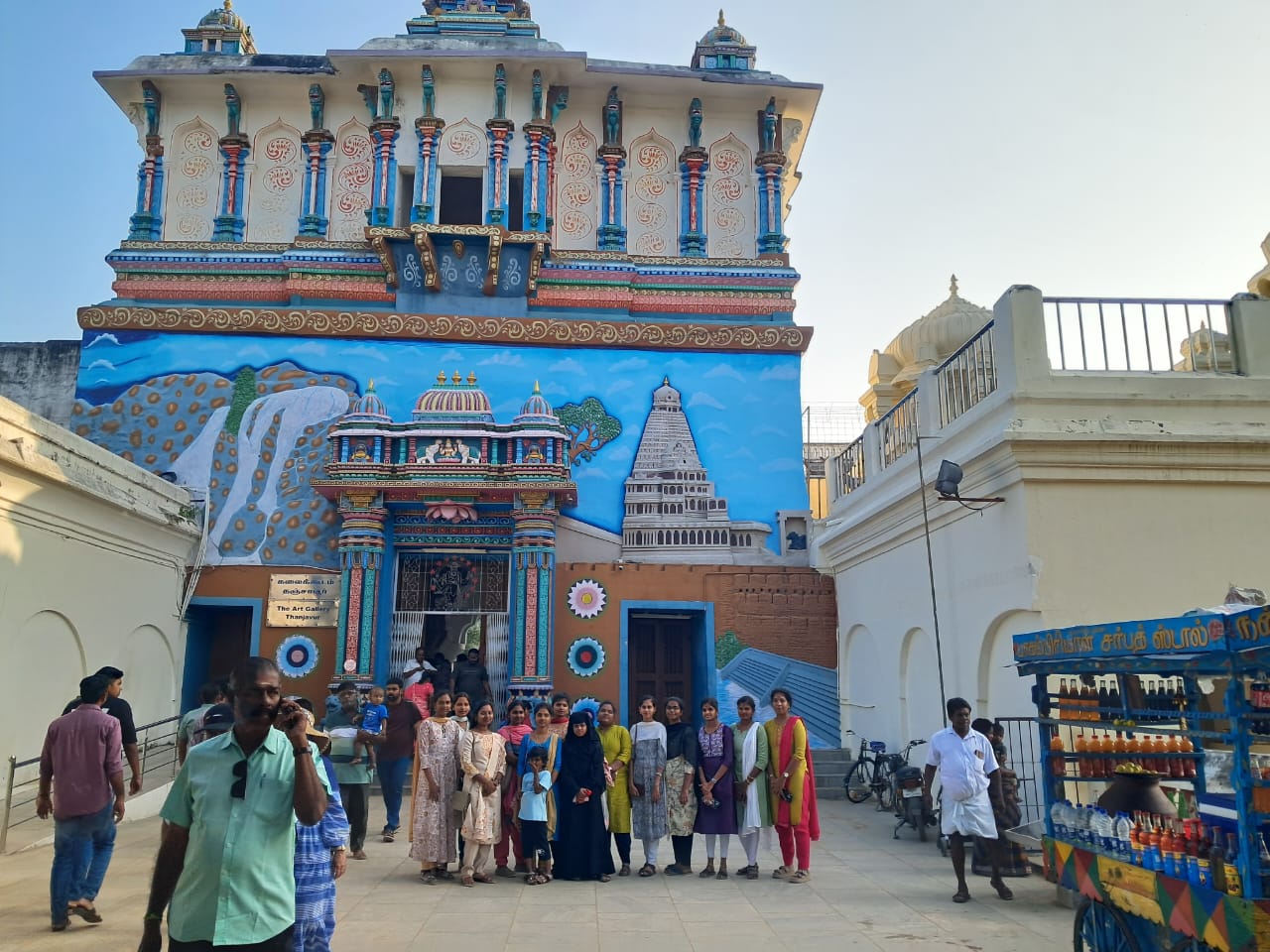

On 27.12.2025 , the Department of Mathematics organized a field trip to Thanjavur, a city renowned for its historical significance and the mathematical brilliance of the Chola period. The trip offered a unique opportunity to explore the real-life application of mathematical concepts in ancient architecture and engineering.
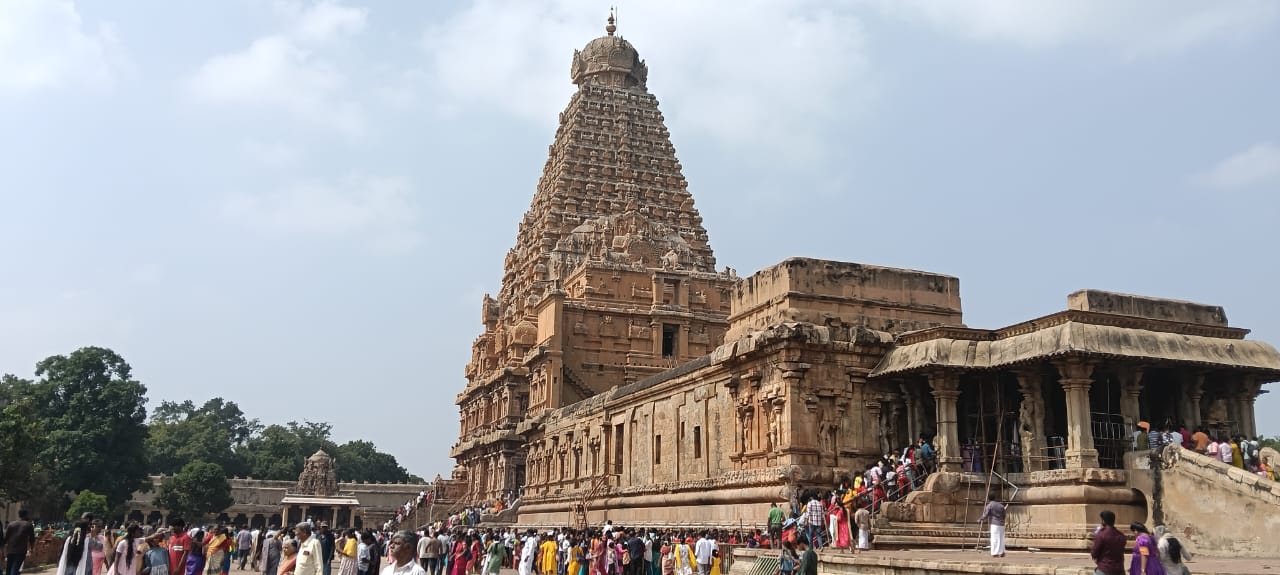
The visit began at 11:00 a.m. with the Brihadeeshwara Temple, built by Raja Raja Chola I. This architectural marvel features a vimana that stands approximately 66 meters tall, constructed with precise geometric proportions. A fascinating aspect observed was that the shadow of the tower does not fall on the ground at noon, demonstrating the Chola dynasty’s advanced knowledge of angles and symmetry. The massive Nandi statue at the entrance also reflects accurate measurements and proportional design.
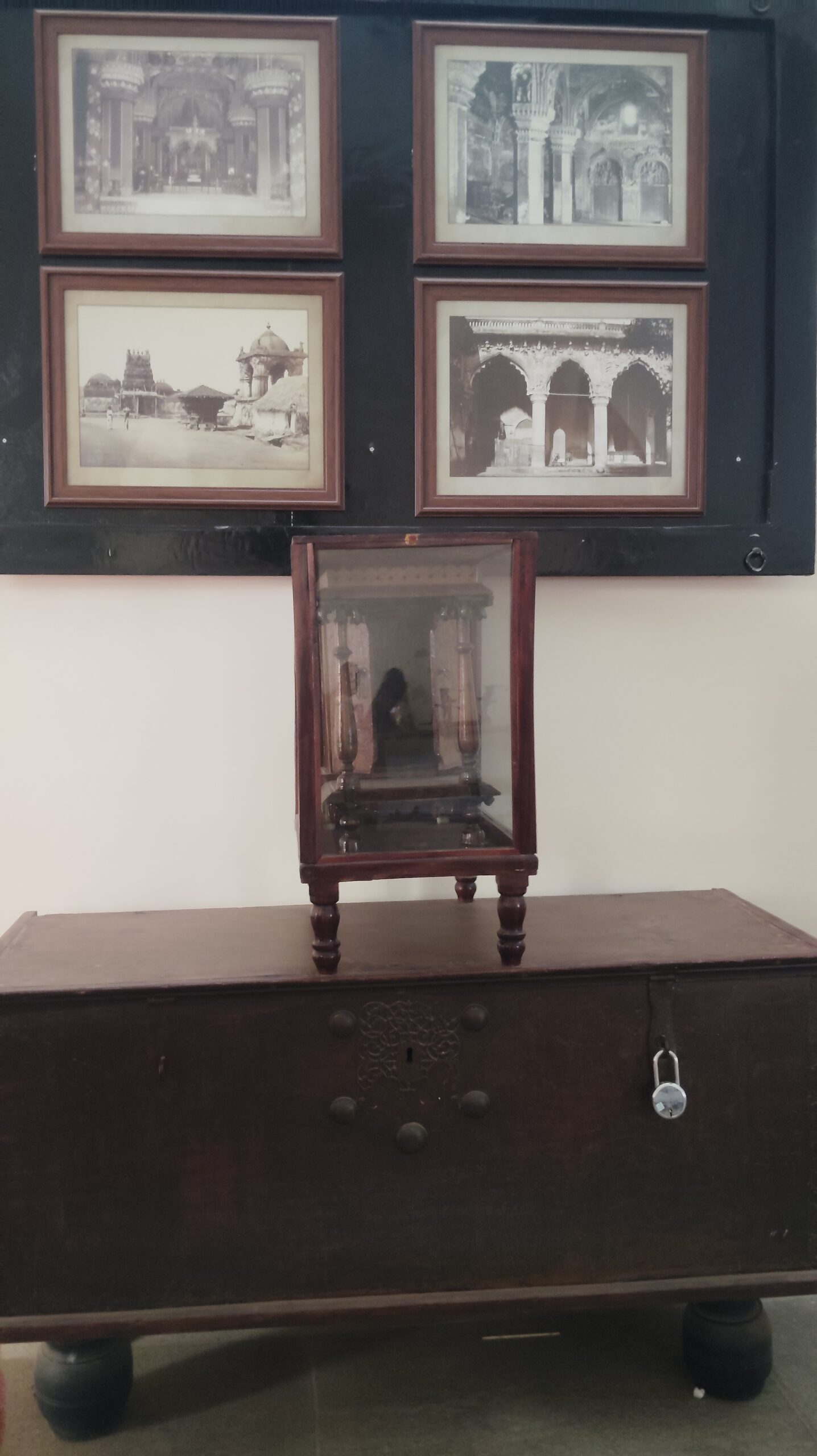
At 1:00 p.m., students explored the Thanjavur Palace and the Chola Durbar Hall. The intricate layout of the palace showcases symmetry, alignment, and spatial planning. The Durbar Hall, in particular, reveals how mathematical precision contributed to architectural balance and effective administrative planning. The next stop was the Saraswathi Mahal Library at 2:00 p.m., one of Asia’s oldest libraries. It houses a rich collection of ancient manuscripts related to mathematics, astronomy, and science, offering insights into how deeply mathematics was integrated into education and intellectual pursuits during ancient times.
The final destination was Kallanai (Grand Anicut) at 6:00 p.m., built by King Karikala Chola across the Cauvery River. Known as one of the world’s oldest water-regulating structures, it highlights the use of mathematical concepts such as measurement, slope calculation, and flow control in civil engineering. This mathematics field trip to Thanjavur was both educational and inspiring, helping students appreciate how mathematics was applied practically in various domains—from monumental architecture to irrigation and knowledge preservation—during the Chola era.